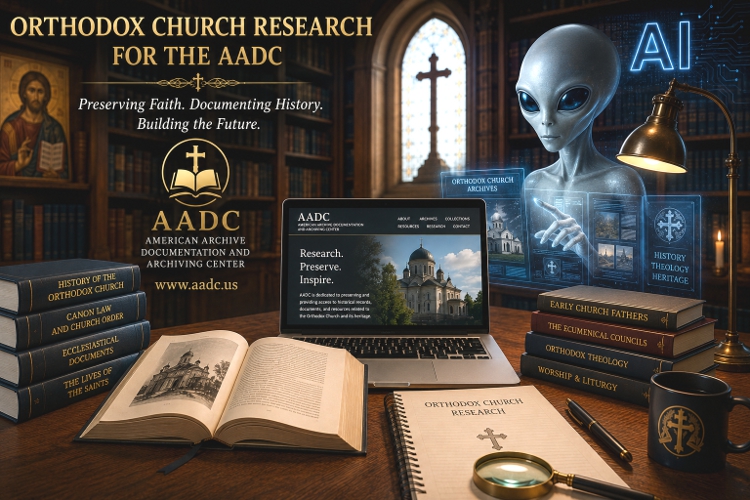
AADC – Centrul American de Documentare și Arhivare Ortodoxă
Memoria Vie a Ortodoxiei Românești și Universale în America de Nord
Websiteul AADC – American Archive & Documentation Center, disponibil la www.aadc.us, reprezintă un proiect dedicat documentării, cercetării și arhivării patrimoniului spiritual și istoric al Ortodoxiei în America de Nord. Într-o perioadă în care numeroase documente istorice, fotografii, arhive bisericești și mărturii ale comunităților ortodoxe din diaspora riscă să fie pierdute, acest centru își propune să conserve memoria istorică și identitatea spirituală a Ortodoxiei tradiționale.
Scopul principal al acestui proiect este de a oferi resurse și informații despre expresia tradițională a Sfintei Ortodoxii, punând în lumină continuitatea apostolică a Bisericii, dezvoltarea jurisdicțiilor ortodoxe în America și contribuția comunităților românești la viața spirituală și culturală a continentului nord-american.
AADC are un caracter pan-ortodox și educațional, urmărind promovarea cercetării academice, păstrarea adevărului istoric și conservarea patrimoniului ecleziastic ortodox pentru generațiile viitoare. În contextul interesului crescând pentru Ortodoxie în Statele Unite și în lumea occidentală, existența unui astfel de centru de documentare și arhivare devine deosebit de importantă.
Nașterea Creștinismului și Formarea Ortodoxiei Universale
De la Biserica Apostolică la Cele Șapte Sinoade Ecumenice
Sfânta Ortodoxie reprezintă continuarea neîntreruptă a Bisericii întemeiate de Mântuitorul Iisus Hristos și propovăduite de Sfinții Apostoli. După Pogorârea Sfântului Duh la Cincizecime, credința creștină s-a răspândit rapid în întreg Imperiul Roman, organizându-se în jurul marilor centre apostolice: Ierusalim, Antiohia, Alexandria, Roma și Constantinopol.
Primele trei secole ale creștinismului au fost marcate de persecuții severe împotriva creștinilor. Mii de martiri și mărturisitori ai credinței au suferit moarte pentru Hristos, iar sângele lor a devenit temelia spirituală a Bisericii.
După Edictul de la Milano din anul 313, emis de Sfântul Împărat Constantin cel Mare, creștinismul a primit libertate în Imperiul Roman. În secolele următoare au fost convocate cele Șapte Sinoade Ecumenice, care au definit învățătura ortodoxă despre Sfânta Treime, dumnezeirea Mântuitorului Hristos, cinstirea Maicii Domnului și a Sfintelor Icoane, condamnând ereziile care amenințau unitatea Bisericii.
Ortodoxia a rămas astfel păstrătoarea fidelă a tradiției apostolice și patristice, continuând viața liturgică și spirituală moștenită din primele veacuri creștine.
Marea Schismă și Răspândirea Ortodoxiei în Răsărit
Constantinopolul, lumea slavă și Patriarhiile Ortodoxe
În anul 1054 a avut loc ruptura dintre Biserica Romei și Biserica Ortodoxă a Răsăritului, eveniment cunoscut în istorie drept Marea Schismă. După această separare, Ortodoxia și-a continuat existența în jurul patriarhiilor istorice ale Răsăritului: Constantinopol, Alexandria, Antiohia și Ierusalim.
În secolele următoare, Ortodoxia s-a răspândit în lumea slavă prin activitatea misionară a Sfinților Chiril și Metodie și a ucenicilor lor. Creștinarea bulgarilor, sârbilor și rușilor a dus la apariția unor importante centre ortodoxe în Europa de Est.
Un moment decisiv l-a reprezentat creștinarea Rusiei kievene în anul 988, când Sfântul Cneaz Vladimir a primit botezul și a introdus credința ortodoxă în lumea rusă. După căderea Constantinopolului în 1453, Moscova a început să fie văzută de mulți drept un important centru al Ortodoxiei, iar în anul 1589 Patriarhia Moscovei a fost recunoscută oficial.
În paralel, poporul român și-a păstrat continuitatea credinței ortodoxe încă din epoca apostolică. Tradiția românească leagă începuturile creștinismului de propovăduirea Sfântului Apostol Andrei în Dobrogea. În anul 1885 a fost recunoscută autocefalia Bisericii Ortodoxe Române, iar în anul 1925 aceasta a fost ridicată la rang de Patriarhie.
Veacul Persecuțiilor
Comunismul și drama Bisericii Ortodoxe
Secolul XX a adus una dintre cele mai dramatice perioade din istoria Ortodoxiei. După Revoluția Bolșevică din 1917, Biserica Ortodoxă Rusă a fost supusă unei persecuții sistematice fără precedent. Mii de episcopi, preoți, monahi și credincioși au fost executați sau trimiși în lagărele sovietice, iar bisericile și mănăstirile au fost închise sau distruse.
Această tragedie a influențat întreaga lume ortodoxă și a afectat profund comunitățile ortodoxe din diaspora. După instaurarea comunismului în România în anul 1945, și Biserica Ortodoxă Română a fost supusă unor presiuni și control politic din partea regimului comunist.
Începuturile Ortodoxiei Române Organizate în America
Episcopia Misionară și Episcopul Policarp Morușcă
Valurile de imigrație românească din primele decenii ale secolului XX au dus la întemeierea a numeroase comunități ortodoxe românești în Statele Unite și Canada. Pentru organizarea acestora, Patriarhia Română a înființat în anul 1929 Episcopia Misionară Ortodoxă Română din America.
Primul episcop al noii episcopii a fost Episcopul Policarp Morușcă, trimis în America pentru consolidarea vieții spirituale și administrative a diasporei românești. Activitatea sa a avut o importanță majoră pentru organizarea comunităților ortodoxe române și pentru păstrarea identității naționale și religioase a emigranților români.
Sub conducerea Episcopului Policarp au fost organizate congrese bisericești, noi parohii și activități culturale și pastorale menite să unească diaspora românească din America de Nord.
Ruptura provocată de instaurarea comunismului
Separarea jurisdicțiilor românești din diaspora
După instaurarea regimului comunist în România, relațiile dintre Episcopia Română din America și Patriarhia Română au devenit extrem de tensionate. Numeroși clerici și credincioși români din America au refuzat să accepte influența autorităților comuniste asupra vieții bisericești din România.
Această situație a dus la o ruptură administrativă și jurisdicțională între diaspora românească și Biserica din țară. În deceniile următoare, Ortodoxia românească din America a fost marcată de dispute canonice, reorganizări și tensiuni interne.
Episcopul Valerian Trifa și legătura cu Mitropolia Rusă
Începuturile relației cu OCA
În anul 1952, Episcopul Valerian Trifa a fost consacrat episcop de către episcopi ucraineni considerați schismatici de anumite jurisdicții ortodoxe. Din această cauză, consacrarea sa nu a fost recunoscută de fosta Mitropolie Rusă din America.
În anul 1962, episcopia condusă de Valerian a intrat în jurisdicția Mitropoliei Ruse din America. Pentru regularizarea situației canonice, Mitropolia a considerat necesară rehirotonirea sau reconsacrarea sa.
Acest moment a reprezentat începutul integrării Episcopiei Române în structura care avea să devină Orthodox Church in America.
Formarea Orthodox Church in America
Autocefalia din 1970 și idealul unei Ortodoxii americane
În anul 1970, Patriarhia Moscovei a acordat autocefalie fostei Mitropolii Ruse din America, eveniment care a dus la formarea Orthodox Church in America. Noua structură bisericească a fost concepută în perspectiva dezvoltării unei Ortodoxii locale nord-americane, cu statut autocefal.
Totuși, această autocefalie nu a fost primită uniform în lumea ortodoxă. Deși este recunoscută canonic de Patriarhia Moscovei și de anumite Biserici Ortodoxe, ea este considerată contestată sau nerecunoscută de mai multe Biserici Ortodoxe autocefale importante, inclusiv Patriarhia Ecumenică de Constantinopol și Biserica Ortodoxă Română, precum și de alte jurisdicții ortodoxe. Din acest motiv, statutul canonic al OCA este adesea descris în teologia și diplomația bisericească drept unul „parțial recunoscut” sau aflat în dezbatere, în funcție de perspectiva fiecărei Biserici Ortodoxe autocefale.
OCA a moștenit în mare parte parohii mici și modeste, aparținând comunităților de emigranți ortodocși. În ciuda dificultăților financiare și administrative, OCA a continuat să se dezvolte și să promoveze idealul unei Ortodoxii unite pe continentul american.
Parohia „Sfânta Treime” din Los Angeles - Intrarea în ROEA și modificările statutare
În anul 1975, Episcopul Valerian a convins Parohia Ortodoxă Română „Sfânta Treime” din Los Angeles să intre în cadrul Episcopiei Ortodoxe Române din America (ROEA), aflată sub jurisdicția OCA. În aceeași perioadă, pentru prima dată în statutele parohiei a fost introdusă menționarea ROEA ca beneficiar al proprietăților parohiale în eventualitatea dizolvării comunității. Această prevedere avea să joace un rol important în conflictele administrative și juridice ulterioare.
Arhiepiscopul Nathaniel și perioada marilor tensiuni
Dialogul pentru reunificarea românească
În anul 1984 a fost ales Episcopul Nathaniel Popp ca ierarh conducător al ROEA. După căderea comunismului în România, în anul 1991 a fost inițiat un dialog oficial între ROEA și Arhiepiscopia Ortodoxă Română aflată sub Patriarhia Română.
Scopul acestui dialog era reunificarea jurisdicțiilor ortodoxe românești și formarea unei Mitropolii Ortodoxe Române unite în America de Nord. Mulți clerici și credincioși considerau că motivele istorice ale separării dispăruseră odată cu căderea regimului comunist. Totuși, după aproape două decenii de discuții, procesul de reunificare a fost întrerupt în anul 2011 fără explicații publice clare, fapt care a produs dezamăgire în numeroase comunități românești.
Cazul Episcopului Irineu Duvlea
Ascensiunea unui ierarh popular și conflictul cu conducerea ROEA
Unul dintre cele mai controversate episoade din istoria recentă a ROEA îl reprezintă cazul Episcopului Irineu Duvlea. Originar din România și format în tradiția monahală ortodoxă, Irineu a fost adus în America de Arhiepiscopul Nathaniel pentru a contribui la dezvoltarea vieții spirituale și monahale a episcopiei.
În anul 2002, Irineu Duvlea a fost ales Episcop Vicar al ROEA. Prin activitatea sa pastorală intensă, prin conferințe, slujiri și apropierea față de credincioși, el a devenit foarte popular în rândul românilor ortodocși din Statele Unite și Canada.
Sub îndrumarea sa au fost dezvoltate importante comunități monahale românești, inclusiv mănăstirile „Înălțarea Domnului” din Detroit și Clinton, Michigan. Aceste mănăstiri au devenit centre spirituale importante pentru diaspora românească.
Pe măsură ce popularitatea sa a crescut, relațiile dintre Episcopul Irineu și Arhiepiscopul Nathaniel s-au deteriorat. Susținătorii Episcopului Irineu au considerat că aceste conflicte au fost alimentate de rivalități administrative și de influența crescândă a episcopului vicar în cadrul comunităților românești. În anii următori au fost inițiate proceduri disciplinare în cadrul consistoriului bisericesc al ROEA, proceduri considerate de numeroși clerici și credincioși drept nedrepte și lipsite de imparțialitate.
În anul 2015, cazul a fost trimis Cancelariei OCA pentru demersuri de caterisire. Între anii 2015 și 2017 au avut loc proceduri disciplinare considerate de susținătorii săi drept un „proces-farsă”, aceștia afirmând că verdictul fusese stabilit înaintea unei evaluări canonice reale.
În anul 2017, Episcopul Irineu Duvlea a fost oficial depus din treapta episcopală. Decizia a provocat puternice reacții și diviziuni între credincioșii români ortodocși din America. Ulterior au urmat conflicte privind proprietățile monahale. Mănăstirea „Înălțarea Domnului” din Detroit a fost pierdută în anul 2011, iar în anul 2020 și proprietatea mănăstirii „Înălțarea Domnului” din Clinton a fost confiscată în urma disputelor administrative și jurisdicționale.
Cu toate acestea, Episcopul Irineu și-a continuat activitatea religioasă și misionară prin organizarea unei noi comunități monahale – Mănăstirea „Sfânta Treime” din Clinton, Michigan, în anul 2021. Noua mănăstire a primit donații importante, inclusiv din partea familiei Adrian Lupu-Leica, contribuții care au permis dezvoltarea activităților religioase, culturale și filantropice ale comunității.
Până în prezent, Episcopul Irineu continuă să desfășoare activități pastorale, liturgice și culturale în cadrul comunităților ortodoxe românești tradiționale din America.
Documente aflate în arhiva digitală a Centrului American de Documentare a Arhivelor (Ortodoxe) www.aadc.us dovedesc clar că Episcopul Irineu Duvlea a fost îndepărtat numai administrativ de către Orthodox Church in America în anul 2017, la cererea Conducerii episcopiei ROEA.
Această măsură este considerată nulă din punct de vedere canonic la nivel mondial, deoarece Patriarhia Română, Patriarhia Ecumenică a Constantinopolului majoritatea Bisericilor pan-Ortodoxe nu recunosc autocefalia sau jurisdicția deplină a OCA.
În consecință, potrivit acestei interpretări, Episcopul Irineu își păstrează integral harul episcopal și continuă să se afle în comuniune activă cu Biserica Mamă, și celelalte biserici ortodoxe, cu exceptia OCA, realitate exprimată liturgic în cadrul slujbelor oficiate la "Holy Trinity Romanian Orthodox Monastery" din Clinton, Michigan, unde îl pomenește direct pe Patriarhul Bartolomeu al Patriarhiei Ecumenice.
Reîntoarcerea către Biserica Mamă
Mitropolia Ortodoxă Română și transferul Parohiei „Sfânta Treime”
În anul 2016, Patriarhia Română a consolidat oficial Mitropolia Ortodoxă Română a celor Două Americi, reafirmând legătura spirituală și canonică dintre diaspora românească și Biserica Mamă.
Nemulțumită de întreruperea dialogului de reunificare, Parohia „Sfânta Treime” din Los Angeles a decis în anul 2022 să părăsească jurisdicția ROEA și să intre sub omoforul Mitropoliei Ortodoxe Române.
Părintele Constantin Alecse a fost acuzat de anumite cercuri din ROEA că ar fi favorizat această plecare, deși fusese pensionat împotriva voinței sale la data de 15 septembrie 2022 și nu mai avea autoritate administrativă asupra parohiei. În luna noiembrie 2022, el a fost primit oficial în cadrul Mitropoliei Ortodoxe Române a celor Două Americi.
Controversele recente și disputele canonice
Depunerea din 2026 și tensiunile jurisdicționale
În 19 mai 2026, ROEA a anunțat pe siteul ei o așa-zisa „depunere din treaptă” a părintelui Constantin Alecse, deși acesta se afla deja, de mulți ani, în rânduială canonică în afara jurisdicției ROEA, considerând și factorul pensionării părintelui Constantin Alecse de către Arhiepiscopul Nathaniel în 15 Septembrie 2022 și, potrivit documentelor, pensionare recunoscută și înregistrată la cancelaria OCA încă din anul 2022. Încă din anul 2022, părintele Constantin fusese primit oficial și recunoscut canonic de către Mitropolitul Nicolae al Mitropoliei Românești și Consiliul Mitropolitan, la 11 noiembrie 2022, ceea ce îl plasează, începând cu acea dată din punct de vedere ecleziologic, sub ascultarea sa, o jurisdicție ortodoxa canonică. În prezent, numele parintelui Constantin Alecse nu apare nicaieri în analele OCA cum ca ar fi depus din treapta. Așadar, încă o grosolănie din partea ROEA, ea însăși având o istorie de a fi o entitate schismatică.
Mai mult, începând cu ianuarie 2023, Mitropolitul Nicolae a solicitat în mod formal transmiterea „cărții canonice” a părintelui Constantin către Arhiepiscopul Nathaniel, însă, până în prezent, nu a fost primit niciun răspuns oficial din partea acestuia. În acest context, lipsa oricărui transfer canonic documentat și neclarificarea situației administrative ridică serioase semne de întrebare cu privire la competența jurisdicțională asupra clericului în cauză la momentul pretinsei sancțiuni.
Prin urmare, actul de „depunere” din 2026 este lipsit de temei canonic și jurisdicțional valid, întrucât a fost emis asupra unei persoane care nu se mai afla sub autoritatea directă a ROEA, dar și în absența respectării procedurilor inter-jurisdicționale recunoscute în practica canonică a Bisericii Ortodoxe universale. În acest sens, situația reflectă o încălcare gravă a principiilor de ordine bisericească și a disciplinei canonice de către Arhiepiscopul Nathaniel, precum și complexitatea disputelor administrative și jurisdicționale din cadrul Ortodoxiei românești din America de Nord.
Păstrarea Memoriei Ortodoxe - Rolul arhivelor și al cercetării istorice |
 |
Toate aceste evenimente demonstrează importanța conservării documentelor istorice și a memoriei ecleziastice a comunităților ortodoxe din diaspora. Într-o epocă în care informația circulă rapid, dar nu întotdeauna corect, existența unor platforme dedicate cercetării istorice și arhivării ortodoxe devine o lucrare esențială.
Prin activitatea sa de documentare și arhivare, AADC urmărește să contribuie la păstrarea acestei memorii pentru generațiile viitoare, oferind un spațiu dedicat cercetării, educației și mărturisirii credinței ortodoxe în lumea contemporană.
|
|


RESURSE ELECTRONICE DIN ROMANIA
REVISTE ŞI ALTE RESURSE ELECTRONICE DIN STRĂINĂTATE
BIBLIOTECI DIGITALE
|
|
|
|